AI's Energy Appetite: How Nuclear Power May Fuel the Next Digital Revolution
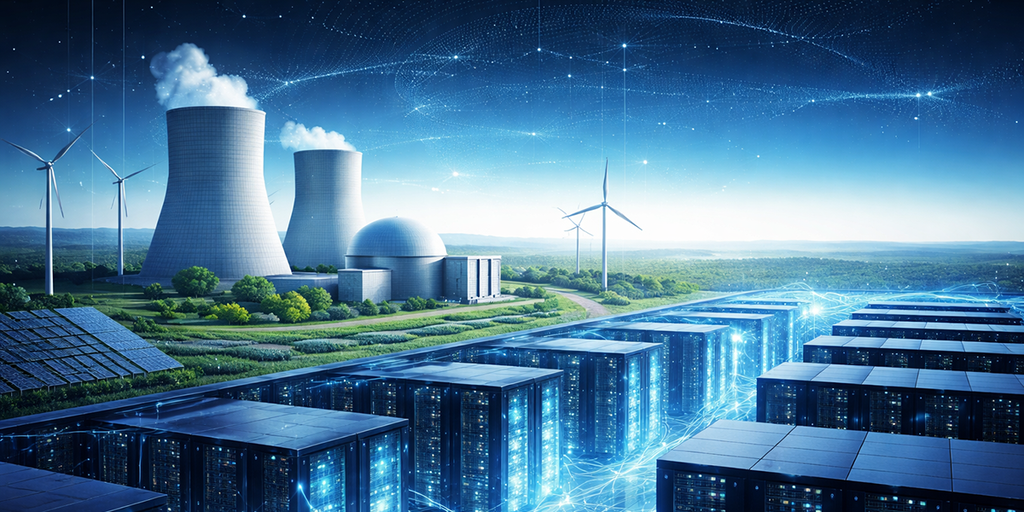
Artificial intelligence is reshaping industries at a remarkable speed, but it comes with a hidden cost. Every AI query, every model trained, and every cloud application running in the background draws electricity from the grid. As AI systems scale, so does the energy demand behind them, and how the world chooses to meet that demand will have lasting consequences for the climate.
A Rapidly Growing Energy Footprint
According to the International Energy Agency (IEA), data centers consumed approximately 415 terawatt-hours (TWh) of electricity globally in 2024, which is roughly 1.5% of total global electricity use. That figure is projected to more than double to around 945 TWh by 2030, driven primarily by the rapid adoption of AI. The United States alone accounted for about 45% of global data center electricity consumption, followed by China (25%) and Europe (15%).
Training a single large AI model is far from trivial. The World Economic Forum estimates that training a model comparable in scale to ChatGPT can generate approximately 552 tonnes of CO₂, equivalent to the annual carbon footprint of 121 average U.S. households. While training is energy-intensive, inference (the ongoing use of AI systems) can account for up to 90% of the lifecycle energy demand, as millions of daily queries accumulate over time.
Why Renewables Alone Are Not Enough
Renewable energy, particularly solar and wind, is expanding rapidly and remains central to global decarbonization strategies. However, these sources are inherently variable. While grid-scale storage, expanded transmission networks, and demand-side flexibility can help manage this variability, system-level challenges can emerge as their share of total electricity supply increases.
Data centers also require continuous, reliable power. Even brief disruptions can have significant operational consequences. As AI infrastructure scales, ensuring a consistent electricity supply highlights the importance of integrating a diverse energy mix, where renewable generation is complemented by firm, low-carbon energy sources capable of maintaining grid stability.
Nuclear Power: The Case for a Comeback
Nuclear energy is increasingly being reconsidered as part of this mix. Nuclear power plants generate electricity through controlled fission reactions that emit virtually no greenhouse gases during operation. Lifecycle assessments place nuclear emissions at roughly 12 grams of CO₂-equivalent per kilowatt-hour, comparable to wind power and significantly lower than fossil fuels. Another major advantage is reliability. Nuclear plants consistently operate with capacity factors exceeding 90%, delivering stable electricity output regardless of weather conditions; precisely the kind of firm power that large data centers require.
The IEA reports that nuclear already contributes a meaningful share of electricity to data centers, and that role is expected to grow. Technology companies are already moving in this direction. In 2024, Amazon, Microsoft, and Google each advanced nuclear-linked energy strategies, including direct procurement from nuclear facilities and agreements tied to future reactor deployment.
Small Modular Reactors: The Next Generation
Much of the current interest is focused on Small Modular Reactors (SMRs). These reactors are designed to be factory-built and deployed at smaller scales, typically up to 300 megawatts, thus allowing for greater flexibility and potential co-location with industrial or data-center infrastructure. SMRs also incorporate advanced passive safety systems capable of operating without external power or human intervention.
That said, nuclear energy is not without its challenges. Nuclear energy currently has high upfront capital costs, extended development timelines, and financing complexity. Public concerns around waste management, operational safety, and social acceptance persist in policy discussions.
But these are not unmanaged risks; they can potentially be addressed through some of the world's strictest regulatory frameworks. International governance protocols, including the Convention on the Physical Protection of Nuclear Material and the Joint Convention on Spent Fuel Management, establish rigorous safety standards. Spent fuel is managed through multi-stage systems: water-cooled pools for initial storage, followed by dry cask containment for long-term isolation.
Yes, capital costs are substantial, but nuclear provides baseload, low-carbon electricity for 60+ years, often delivering climate stability and energy security that fossil fuels cannot match. When measured against the environmental and economic costs of continued fossil dependence, nuclear's long-term value becomes clearer.
Canada: A Rising Nuclear Leader
Canada is emerging as a global leader in advanced nuclear development. Through its SMR Action Plan, launched in 2020, the country has built a national partnership to advance next-generation nuclear technologies. In April 2025, the Canadian Nuclear Safety Commission approved the construction of a BWRX-300 SMR at the Darlington site in Ontario, the first grid-scale SMR under construction in any G7 country. The first unit is expected to be operational by the end of 2029, with additional units planned.
Canada’s CANDU reactor expertise continues to support major refurbishment programs at Bruce, Darlington, and Pickering. Looking ahead, a proposed site at Wesleyville could host up to 10,000 MW of nuclear capacity, highlighting the scale at which nuclear may contribute significantly to the future electricity demand.
The Road Ahead
The energy question can no longer be treated as a footnote to the AI story. A credible path forward will combine renewable expansion, energy storage, transmission upgrades, efficiency improvements, and firm low-carbon power. The real challenge is no longer just digital transformation, but sustainable digitalization. The decisions made today by governments, technology companies, and citizens will determine whether the digital revolution becomes a driver of sustainability or an obstacle to it.
References
- **IEA. (2025). Energy and AI. International Energy Agency. **https://www.iea.org/reports/energy-and-ai
- **IEA. (2025). Global Energy Review 2025: Electricity. International Energy Agency. **https://www.iea.org/reports/global-energy-review-2025/electricity
- World Economic Forum. (2025). How data centres can avoid doubling their energy use by 2030. https://www.weforum.org/stories/2025/12/data-centres-and-energy-demand/
- Pew Research Center. (2025). What we know about energy use at U.S. data centers amid the AI boom. https://www.pewresearch.org/short-reads/2025/10/24
- IPCC / UNECE. (2022). Carbon Neutrality in the UNECE Region: Integrated Life-Cycle Assessment of Electricity Sources. United Nations Economic Commission for Europe.
- Canadian Nuclear Safety Commission. (2025). Construction Licence — Darlington New Nuclear Project. https://www.cnsc-ccsn.gc.ca
- Ontario Power Generation. (2026). New Nuclear at Wesleyville — Initial Project Description. https://www.opg.com