Learning From Nature: How Biomimicry Can Help Us Rethink Climate Solutions
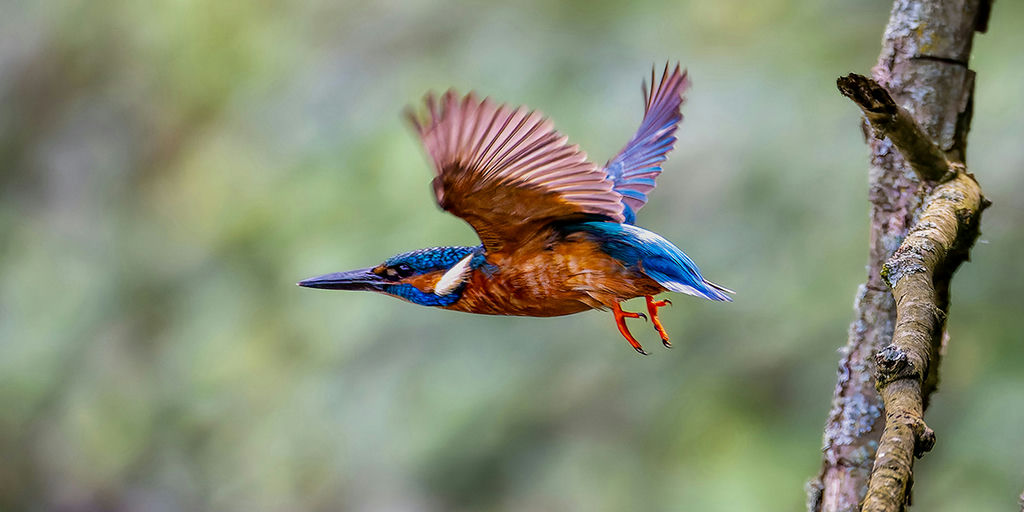
Photo by Siegfried Poepperl on Unsplash
Did you know that some of the most innovative architectural designs and technological breakthroughs have come from simply observing nature?
Imagine facing a problem that feels impossible to solve. You try to think outside the box, but the routines of everyday life and the communities that we have become so accustomed to often keep our thinking confined to familiar patterns. Our ideas circle around the same solutions, trapped within the logic of the structures we have built.
So you step away. You take a walk in a forest, a park, or near a lake. You slow down, listen, and begin observing the plants, animals, and ecosystems around you. Gradually, something shifts. You start noticing the subtle yet powerful mechanisms that allow nature to survive, adapt, and thrive.
And in that moment, you begin to see connections you hadn’t imagined before.
This way of learning from nature, observing it, understanding it, and translating its strategies into human solutions, has a name: biomimicry. Biomimicry is the practice of studying nature’s strategies and applying them to human challenges. Over 3.8 billion years of evolution, life on Earth has developed highly efficient and resilient ways to solve complex problems, approaches that scientists, designers, and engineers continue to reinterpret and translate into innovation.
When Nature Inspires Innovation
If the concept still feels abstract, some well-known examples show just how powerful this approach can be.
- Velcro and burr seeds. One of the most famous biomimicry stories began with a simple observation: Swiss engineer George de Mestral noticed burr seeds sticking to his dog’s fur during a walk. Curious about how they attached so effectively, he examined them under a microscope and discovered tiny hook-like structures — an insight that led to the invention of Velcro.
- The bullet train inspired by a bird. Japan’s high-speed Shinkansen bullet train once faced a major issue: loud noise when exiting tunnels. Engineers found a solution by studying the beak of the kingfisher bird, which dives into water with minimal splash. The redesigned train became quieter and significantly more energy efficient.
- Self-cleaning surfaces inspired by lotus leaves. Lotus leaves naturally repel water and dirt thanks to their microscopic surface structure, which prevents particles from sticking. This mechanism has inspired self-cleaning materials now used in architecture, paints, and solar panels.
- Buildings inspired by termite mounds. Some termite mounds regulate temperature through natural ventilation systems. Architects have applied these principles to design buildings that maintain stable indoor climates while drastically reducing energy consumption.
Biomimicry can also be understood at different levels: At a first level, designers mimic the form of natural elements, like the structure of a leaf, a shell, or a bird’s wing. A second level focuses on behavior, exploring how organisms interact with their environment, such as how termites regulate temperature. The most complex level is ecosystem biomimicry, where entire natural systems inspire solutions designed to function in balance with environmental cycles. Across these levels, nature can influence every aspect of design, from form and materials to processes and overall function.
An Ancient Idea, A Modern Opportunity
Although the term biomimicry gained prominence in recent decades — particularly through biologist and author Janine Benyus, who defined it as “the conscious emulation of nature’s genius”, the concept itself is not new. The term appeared in scientific literature as early as 1962, but humans have always looked to nature for inspiration.
What is new is our growing awareness that nature’s billions of years of evolution represent an extraordinary library of sustainable solutions. Today, startups and researchers are increasingly exploring how biological strategies can help address systemic environmental challenges, from sustainable materials and regenerative agriculture to climate-resilient infrastructure.
More Than Innovation: A Shift in Mindset
Biomimicry is not only about technology or engineering. It invites us to rethink how we approach problems altogether. Natural ecosystems operate through balance, cooperation, and circularity, where nothing is wasted. By observing these systems, we can begin to design solutions that work within planetary boundaries rather than constantly pushing beyond them.
In this sense, biomimicry also offers a new way to communicate and experience the climate crisis. Nature has a unique ability to reconnect us emotionally to the living world, something that data and statistics alone often fail to achieve. Learning from nature means learning to observe more carefully, think more creatively, and design solutions that are not only efficient, but regenerative.
After all, the planet has been solving complex challenges for billions of years. Perhaps the smartest innovation we can make is simply learning how to listen.
Also see, “Building Climate Resilience: Where Function Meets Fun”.