Deforestation and Rising Temperatures: A Double Threat
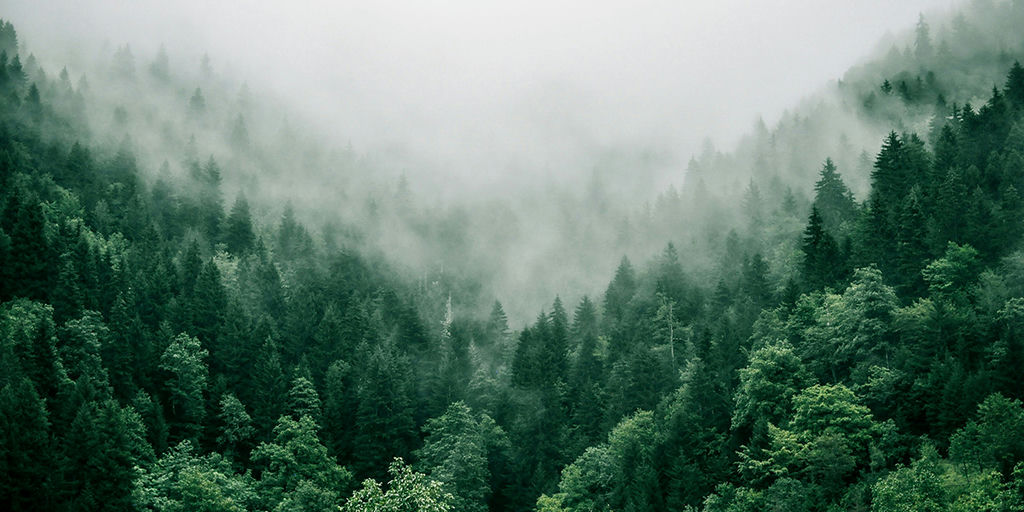
Photo by Marita Kavelashvili on Unsplash
Deforestation is often discussed in terms of biodiversity loss and increased carbon emissions. However, removing forests also changes the local climate in ways that can directly harm human health. Tree loss can raise ground temperatures and intensify heat stress, creating particular risks for communities that depend on tropical ecosystems for water, food and livelihoods.
Deforestation is therefore not only an environmental problem but also a public health and development challenge. Evidence from tropical regions shows that forest loss increases local warming, while forests help keep temperatures lower through evapotranspiration and other surface processes. Protecting forests can provide both mitigation and adaptation benefits.
Evidence: Forest Loss and Temperature Rise in the Tropics
A study published in Nature Climate Change in 2025 examined deforestation and temperature changes across the Amazon, the Congo and parts of Southeast Asia. Using about 20 years of satellite observations, researchers compared areas that retained forests with those that lost tree cover. Forested areas warmed by about 0.2°C, while deforested areas warmed by about 0.7°C (Reddington et al., 2025). This suggests that forest removal can significantly amplify local warming.
Satellite research in Indonesia, Malaysia and Papua New Guinea reached a similar conclusion. Deforestation was found to heat some local areas by as much as 4.5°C, while warming extended into undisturbed forests up to six kilometers away (Thompson et al., 2021). Forest loss can therefore create hotter zones beyond the land that has been directly cleared.
Why Forests Cool: Evapotranspiration and Surface Heat
Forests regulate temperature mainly through evapotranspiration. Trees absorb water from the soil and release it as vapor through their leaves. This works much like sweating: evaporation uses heat, which cools the surrounding air and surface. Forests also provide shade, protect the soil from direct sunlight and help it retain moisture. Their effect on albedo, or the amount of sunlight reflected by a surface, also influences the local energy balance.
A Public Health Risk: Heat Stress and Vulnerability
Higher temperatures can lead to heat exhaustion, heat stroke and greater strain on the cardiovascular and respiratory systems. Low-income communities, outdoor workers, children and older adults are often most exposed because they may have limited access to cooling and healthcare. The 2025 Nature Climate Change study associated tropical deforestation with around 28,000 heat-related deaths each year (Reddington et al., 2025). This shows that forest loss can cause preventable human harm, not only environmental damage.
Beyond Heat: Livelihoods, Agriculture and Food Security
Forests support local water cycles, soil moisture and rainfall patterns. When trees are removed, water systems can become less reliable, harming farmers and weakening food security. These pressures can compound: rising temperatures increase health risks, while disrupted ecosystems threaten income and crop production. Communities already affected by poverty, limited healthcare and dependence on climate-sensitive agriculture face the greatest danger.
Deforestation can also create a feedback loop. Cleared areas become hotter and drier, increasing the risk of further degradation and making forest recovery more difficult. Over time, this can contribute to more frequent heat extremes and continued ecosystem loss.
What Has Been Done So Far?
The United Nations Office for Disaster Risk Reduction (UNDRR) has developed a web-mapping tool that shows how forest loss can influence local temperatures in Southeast Asia. It can help decision-makers connect forest protection with lower CO2e emissions and immediate heat benefits (Thompson et al., 2021). Brazil is also setting up a fund intended to reward countries that protect tropical forests.
International funding, however, remains uneven. Some European countries have supported related facilities, but substantial commitments outside Norway have been limited. Treating forest loss as a distant problem overlooks its cross-border consequences, including migration pressure, air pollution, biodiversity decline and disruption to food supply chains.
What Else Can We Do to Stop Deforestation?
Reducing meat consumption and shifting towards more plant-based diets can reduce pressure for agricultural expansion. A Nature modeling study suggests that replacing 20% of beef consumption could reduce projected deforestation by about 50% (Humpenöder et al., 2022; FAO, 2022). Supporting Indigenous Peoples and recognizing their forest rights is another cost-effective approach. Evidence cited by the Food and Agriculture Organization of the United Nations (FAO) suggests that strengthening Indigenous stewardship and land rights can reduce deforestation by 20% or more, making this one of the most cost-effective approaches available (FAO, n.d.).
Companies must also check whether commodities in their supply chains are linked to forest loss. The EU Regulation on Deforestation-Free Products is designed to require stronger checks on traded goods. This matters because international commodity trade is connected to roughly 40% of tropical deforestation (FAO, 2022; European Union, 2023).
Protecting forests is an immediate investment in public health, livelihoods and food security, as well as a long-term response to climate change.
References
- European Parliament and Council of the European Union. (2023). Regulation (EU) 2023/1115 on deforestation-free products. http://data.europa.eu/eli/reg/2023/1115/oj
- Food and Agriculture Organization of the United Nations. (2022). Global agricultural supply chains, deforestation and responsible sourcing. https://www.fao.org/markets-and-trade/areas-of-work/emerging-trends-challenges-and-opportunities/global-agricultural-supply-chains--deforestation-and-responsible-sourcing/en
- Food and Agriculture Organization of the United Nations. (n.d.). Forest governance by Indigenous and tribal peoples: How can Indigenous and tribal peoples help combat deforestation? https://www.fao.org/americas/priorities/indigenas-gobernanza-bosques/how-can-indigenous-and-tribal-peoples-help-combat-deforestation/en
- Humpenöder, F., Bodirsky, B. L., Weindl, I., Lotze-Campen, H., Linder, T., & Popp, A. (2022). Projected environmental benefits of replacing beef with microbial protein. Nature, 605, 90-96. https://doi.org/10.1038/s41586-022-04629-w
- Reddington, C. L., Smith, C., Butt, E. W., Baker, J. C. A., Oliveira, B. F. A., Yamba, E. I., & Spracklen, D. V. (2025). Tropical deforestation is associated with considerable heat-related mortality. Nature Climate Change, 15, 992-999. https://doi.org/10.1038/s41558-025-02411-0
- Thompson, S., Corrêa, D., Duncan, J., & Crompton, O. (2021, November 15). Deforestation can raise local temperatures by up to 4.5°C - and heat untouched areas 6 km away. PreventionWeb/UNDRR. https://www.preventionweb.net/news/deforestation-can-raise-local-temperatures-45-and-heat-untouched-areas-6km-away