Re-Connecting with Nature to Save Our Earth
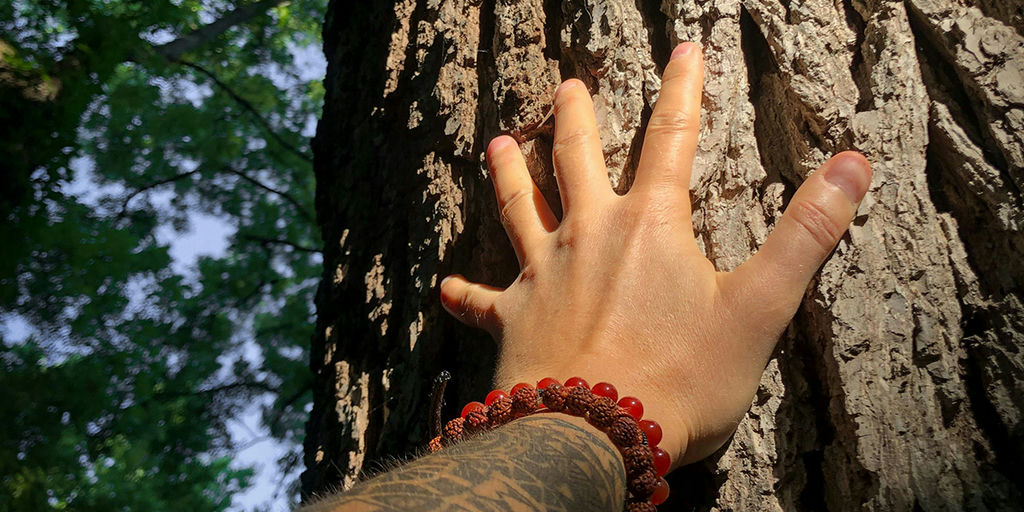
Photo by Frames For Your Heart on Unsplash
Since the industrial revolution and the emergence of a growth-based economic system, humans have increasingly lost touch with the natural world. A recent study by Miles Richardson, Professor of Human Factors and Nature Connectedness at the University of Derby, found that humanity’s connection to nature has decreased 60% since 1800 (see The Guardian).
“Nature connectedness is now accepted as a key root cause of the environmental crisis,” said Richardson.
Value System
As hunters and gatherers, we were aware of the environment and how closely our survival was linked to nature. Since the industrial revolution and the rise of capitalism, we have increasingly lost our reverence for nature, fear of nature, and the desire to protect nature.
Hunters and gatherers valued a tight-knit community, connection to nature, teamwork, and meeting immediate survival needs without the goal of accumulating excess material goods because of a nomadic lifestyle.
With the rise of industrialism, cultural values shifted to hyper-individualism, vying for wealth, material accumulation, and increasing domination of nature. Our appetite for consumption grows as we are inundated with ads on the internet, tv, radio, billboards, and in magazines that pressure us to buy more and keep up with trends.
Capitalism relies on infinite GDP growth and resource extraction on a finite planet, forcing us to ignore planetary boundaries and the health of plants, wildlife, and ecosystems in order to participate. According to a scientific review, “Planetary Health Check”, we’ve already crossed 7 of 9 planetary boundaries: Climate Change, Biosphere Integrity, Land System Change, Freshwater Use, Biogeochemical Flows, Novel Entities, and Ocean Acidification. All seven show worsening trends. Only Ozone Depletion and Aerosol Loading remain in the safe zone.
Unless there is a major technological breakthrough, without a shift back to the values that understand the limits of nature and our place in it, we risk ecological breakdown that threatens the fabric of civilized society. Crop failures, drinking water shortages, extreme weather events, heat waves, and the rise of disease, among other threats to human survival, will worsen as global warming accelerates and ecological breakdown worsens with this relatively rapid change.
Planetary Boundaries
Climate change is only one of 9 planetary boundaries that ensure the Earth remains capable of supporting human life. Other boundaries include biodiversity loss, vital biochemical flows (nitrogen and phosphorus cycles), land-system change (deforestation, urbanization, and agriculture), freshwater use, ocean acidification, stratospheric ozone depletion, atmospheric aerosol loading, and novel entities like pollution and chemicals.
Lowering emissions is critical and will buy us time, but we also need to stop polluting, extracting, and overusing the Earth’s finite resources.
Call to Action
We rely on the Earth for our food, drinking water, and a stable climate that supports a society that is reliable and functions predictably. Human rights have been fundamental in present-day society, but the rights of nature are often excluded from the conversation.
It’s time we reconnect with nature, demand the government take action, and transition to a sustainable lifestyle that considers planetary boundaries. This will ensure we pass a healthy, safe, habitable planet to our children and grandchildren.
More reading Disconnection from Nature: Expanding our understanding of human–nature relations, British Ecological Society Last Child in the Woods, by Richard Louv Animal Ethics: The Ethics of Speciesism, BBC The Dominant Human Nature, Center for Humans and Nature