The Power of Integrated Climate Action

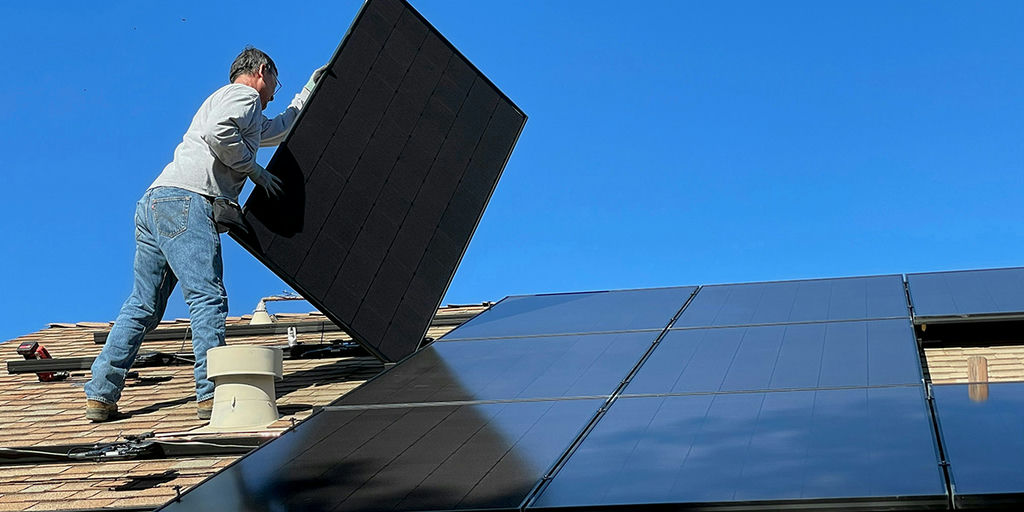
When we talk about climate change, it's tempting to look for the solution: Solar panels. Electric vehicles. Tree planting. Carbon capture. Pick one, scale it up, problem solved - right?
Not quite. Each of these solutions matters, but none works on its own. Climate change isn't a single problem with a single fix. It's a systems problem, and it needs systems thinking.
Engineers are trained to understand complex systems and how changes to one component ripple through the whole system. Climate change works the same way. It's shaped by how we produce energy, design cities, grow food, manage water, and use materials. When we treat these areas separately, we risk missing the bigger picture and sometimes even create new problems.
Climate Change Is a Systems Problem
Take renewable energy, as an example. Transitioning from fossil fuels to clean electricity is essential for reducing emissions, but energy doesn't exist in isolation. Where materials come from, how infrastructure is built, and how much energy we use all matter. A clean grid paired with inefficient buildings or rapidly rising demand still leaves significant emissions behind ( IEA, 2023; see References below).
The same is true for nature-based solutions. Restoring forests, wetlands, and soils can remove carbon while supporting biodiversity and local livelihoods. But poorly planned projects can increase wildfire risk, strain water resources, or displace communities (IPCC, 2023). Good intentions aren't enough; context and coordination also matter a lot.
Systems thinking helps us evaluate solutions across their full lifecycle, including environmental, social, and economic impacts. We should not just ask, "Does this reduce emissions?’’ We must also ask, "What else does this affect, and who benefits or bears the cost?"
The Limits of One-Solution Thinking
Focusing on a single climate solution creates blind spots.
Renewable energy alone cannot meet climate goals if global energy demand continues to rise without proper efficiency measures (IEA, 2023). Carbon capture may play a key role in hard-to-abate sectors like cement and steel, but these technologies are energy-intensive and cannot replace rapid emissions reductions (UNEP, 2023). Tree planting and ecosystem restoration are powerful tools, but there isn't enough land on the Earth to offset unlimited fossil fuel use (IPCC, 2023).
When climate solutions are framed as substitutes rather than complements, progress slows. Climate action becomes polarized—technology versus nature, mitigation versus adaptation, individual action versus systemic change. In reality, these approaches are strongest when they work together.
How Integrated Climate Action Works
Integrated climate action recognizes that solutions are most effective when they reinforce one another.
Clean energy paired with energy efficiency reduces emissions faster while lowering household costs. Climate-resilient agriculture combined with ecosystem restoration improves food security while increasing carbon sequestration. Cities designed around public transit, green spaces, and efficient buildings reduce pollution and improve public health (Rockström et al., 2017).
Education and public awareness are equally critical, as well. Teaching climate literacy at an early age helps shape a generation that understands planetary boundaries, resource limitations, and the consequences of unsustainable growth and consumption. When young people learn these concepts in school, they're more likely to adopt responsible lifestyles, question harmful norms, and lead future decisions differently.
This is a shared responsibility. Civil society, educators, and policymakers all play a role in embedding climate education into school curricula. Equipping young people with systems thinking and environmental awareness creates future leaders prepared not only to respond to climate risks but also to prevent them.
Why This Matters for People
Systems thinking isn't just about technology; it's about people.
Climate solutions that ignore affordability, access, and local realities often fail. Clean energy projects that raise energy bills can deepen inequality. Adaptation plans that overlook community knowledge may miss practical, low-cost solutions already in place. When people are part of the design process, solutions tend to be more durable, equitable, and effective.
Effective climate action happens when policies, financing, technology, education, and behavior change move in the same direction. Governments, businesses, communities, and individuals all play a role. When these efforts align, climate action delivers more than emissions reductions; it supports healthier communities, stronger economies, and a fairer transition (UNEP, 2023).
From "Either–Or" to "Both–And"
The climate crisis is too complex for one-dimensional thinking. We don't need to choose between clean energy or conservation, technology or nature, individual action or systemic change. We need all of them.
Integrated climate action moves us beyond false choices towards smarter solutions that work together. No single climate solution will save us; but many solutions, designed as part of an interconnected system, just might work magic!
Nazwa W. B. Salim is an Independent Sustainability Consultant specializing in climate-aligned infrastructure, ESG strategy and clean energy transitions. Her work advances systems thinking, equitable decarbonization, climate storytelling, advocacy, and the governance of complex infrastructure to support climate-smart, community-focused development.
References:
Intergovernmental Panel on Climate Change (IPCC). (2023). Climate Change 2023: Synthesis Report. Contribution of Working Groups I, II and III to the Sixth Assessment Report. Geneva: IPCC.
International Energy Agency (IEA). (2023). Net Zero by 2050: A Roadmap for the Global Energy Sector. Paris: IEA. https://www.iea.org/reports/net-zero-by-2050
United Nations Environment Programme (UNEP). (2023). Emissions Gap Report 2023. Nairobi: UNEP. https://www.unep.org/resources/emissions-gap-report-2023
Rockström, J., Gaffney, O., Rogelj, J., Meinshausen, M., Nakicenovic, N., & Schellnhuber, H. J. (2017). A roadmap for rapid decarbonization. Science, 355(6331), 1269-1271.